Block Function in Cash or Crash Live How UK Applies This Feature
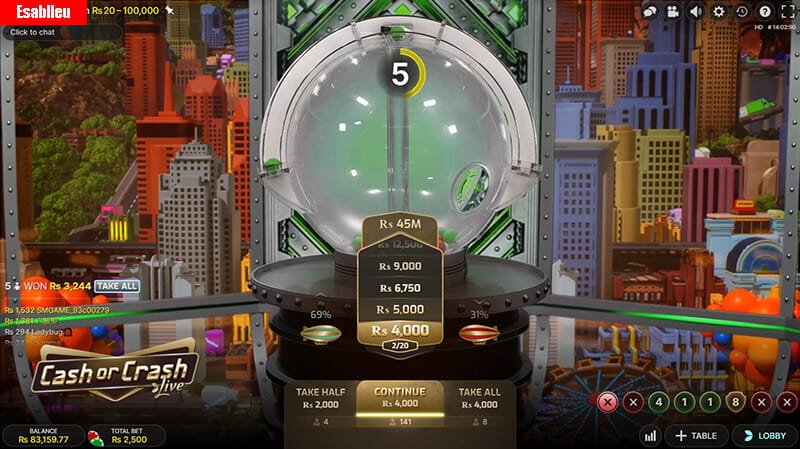
When we look at the inner workings of live TV games like Cash or Crash Live, we encounter features created to give players a illusion of control within a high-volatility environment. The Block tool stands out as among the most significant tactical tools available to UK players. In contrast to the core game of luck, where a unpredictable multiplier can collapse at any moment, the Block enables a player to actively ‘lock in’ a part of their possible gains before the unavoidable crash takes place. It changes a completely passive session into a more interactive, choice-driven version. We see its use as a essential risk-control strategy, separating informal play from more thoughtful approaches. For the UK market, where gambling is often seen through a perspective of both enjoyment and savvy participation, becoming proficient in this feature is crucial to managing the game’s inherent conflict between greed and protection.
Precisely what the Block Function Actually Means

At its core, the Block function in Cash or Crash Live is a simple yet powerful safety mechanism. As a round progresses, as the multiplier goes up, a participant can hit the Block button to guarantee a slice of their prospective winnings. This action establishes a guaranteed floor for that round’s winnings. If it busts at a value below where they placed their block, they still receive the blocked amount. If the game soars past the block point, their potential winnings continue to grow, yet the secured total is guaranteed. It’s vital to grasp that employing the Block does not conclude your play in the current round; your “live” multiplier continues to ride, yet you’ve got a safety cushion. We view this two-state gameplay—having safety while remaining active—to be the function’s psychological hook. For British players, it deals with the timeless issue of knowing when to take money off the table, an idea well-known from everything from the stock market to a tense round of a pub quiz.
Frequent Blocking Mistakes worth Avoiding

Through our analysis of gameplay, we’ve recognized several typical pitfalls UK players should be cognizant of when using the Block. The most frequent mistake is blocking out of alarm at the first sign of a rising multiplier, often at a value so low it barely covers the initial stake. This defeats the function’s objective of securing substantial profit. Conversely, greed leads to the fault of never blocking at all, treating every round as an all-or-nothing gamble, which statistically erases gains over time. Another subtle error is positioning the block at a particular, psychologically notable number like 5.0x, which many other players are also likely to use. If a crash is designed to frequently occur just below such typical thresholds, this strategy can backfire. We advise players to vary their block points and base them on a pre-defined strategy rather than emotional impulses during the thick of the round.
How UK Regulations Shape Feature Use
The employment of features like the Block does not occur in a vacuum; it is defined by the UK’s stringent gambling rules and responsible gaming framework. The UK Gambling Commission mandates that games offer transparent information and features that promote player control. The Block function aligns perfectly with this philosophy, as it is a practical tool for controlling risk and limiting losses. Additionally, the availability of detailed game stats and history, which UK-licensed sites are required to provide, feeds directly into Block strategy. Players can review past rounds to optimize their timing, incorporating analytical strategy. We also note that the UK sector’s focus on transparency results in the mechanics of the Block are clearly explained, preventing misunderstanding. This framework of regulations promotes a more measured, strategic approach to the gameplay, where the Block is regarded not just as a button, but as a central component of informed play.
Distinguishing Block to Auto-Cash-Out
It’s essential to separate the Block function from the individual Auto-Cash-Out feature, as UK players occasionally conflate the two. Auto-Cash-Out is a preset tool where you predetermine a multiplier at which your entire bet is immediately cashed out, ending your involvement in that round completely. The Block function is more nuanced. It does not end your round; it merely secures a part of your winnings while your live bet persists to ride. This means you can still profit from a rising multiplier after blocking, which is not feasible with Auto-Cash-Out. We regard Auto-Cash-Out as a tool for control, enforcing a strict profit target. The Block, on the other hand, is a tool for risk management and opportunity enhancement. A experienced UK player might use both in tandem—for example, setting a cautious Auto-Cash-Out at 10x but using a manual Block at 4x to secure a baseline profit well before that target.
Strategic Timing for UK Players
Tactical utilization of the Block centers on pacing, and UK participants commonly develop patterns based on noted game tendencies and individual tolerance for risk. There exists no widely optimal moment, which is why it is a subject of much discussion. Many recommend an initial block, possibly at a small 1.5x or 2x multiplier, to ensure a tiny but reliable return, growing a bankroll steadily and soundly. Other players, chasing larger profits, will allow the multiplier go far higher before using their block. We analyse the fact that many veteran players in the UK use a combined approach, changing their block threshold according to the behavior of latest rounds. As an illustration, upon several successive low-multiplier failures, some could deploy earlier, anticipating a pattern. On the other hand, following a huge multiplier, the subsequent session could witness participants blocking later, anticipating it happening again. The crucial point is that the action is active and contextual, moving the player from a mere spectator to an engaged participant, controlling their own risk.
Emotional Influence on Gaming
The introduction of the Block function fundamentally alters the psychological dynamic of Cash or Crash Live https://cashorcrashlive.net/. Without the Block, the game is a true test of courage, a binary “cash out or bust” situation that often leads to regret—caused by exiting prematurely or busting out. The Block addresses this by providing a third, soothing option. It alleviates the anxiety of losing everything, which in turn can promote more composed and possibly more lucrative choices. We observe that UK players using the Block frequently describe feeling more empowered, which boosts their pleasure and involvement with the game. Nevertheless, it also introduces new forms of emotional strain, such as the frustration of blocking at 3x just to observe the multiplier increase to 10x. This “fear of missing out” (FOMO) is a powerful force, and mastering how to handle the emotional reaction to a successful or poorly timed block is equally crucial as mastering the timing.
Creating a Individual Block Strategy
Developing a consistent personal strategy for the Block is the hallmark of a careful Cash or Crash Live player in the UK. We advise starting with a bankroll management plan: decide what percentage of your session stake you are prepared to risk per round and what constitutes a profitable profit target. Your Block approach should meet these goals. One method is the “tiered block,” where you block a modest percentage of your potential winnings at a low multiplier, another part at a medium multiplier, and let the rest ride. Another is the “fixed profit” approach, where you determine the exact multiplier needed to obtain a set profit and cash out there every time, overlooking the appeal of greater multipliers. Crucially, any strategy must be written down and stuck to before you begin playing, as in-play emotions will hinder judgement. The Block is a strong tool, but its power is only unlocked through disciplined, deliberate application.